

For decades, automation and industrial robotics have been inextricably linked to an idea of confined space: machines designed to operate within rigidly controlled, predictable, and mostly indoor environments.
Production lines, robotic cells, assembly plants, and manufacturing facilities have been the natural boundaries within which technology has expressed its maximum efficiency.
Today, however, automation is changing direction. Increasingly, work does not take place at a fixed station, but in distributed areas, infrastructure, construction sites, agricultural fields, outdoor industrial spaces, and contexts that are difficult to standardise.
It is here that the perspective changes: it is no longer necessarily the process that must be structured around the machine. It can be the machine that reaches the process, wherever it may be.
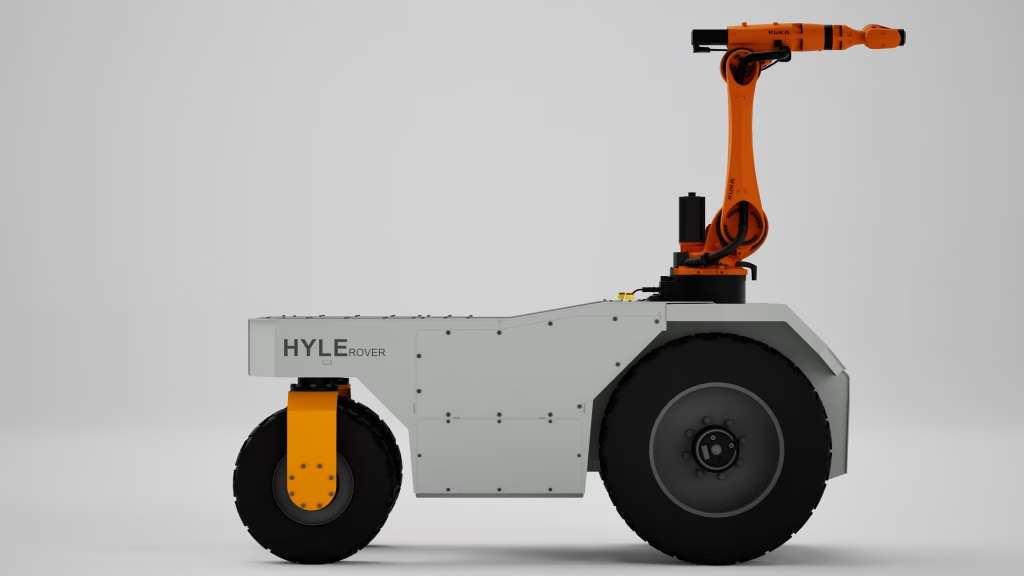
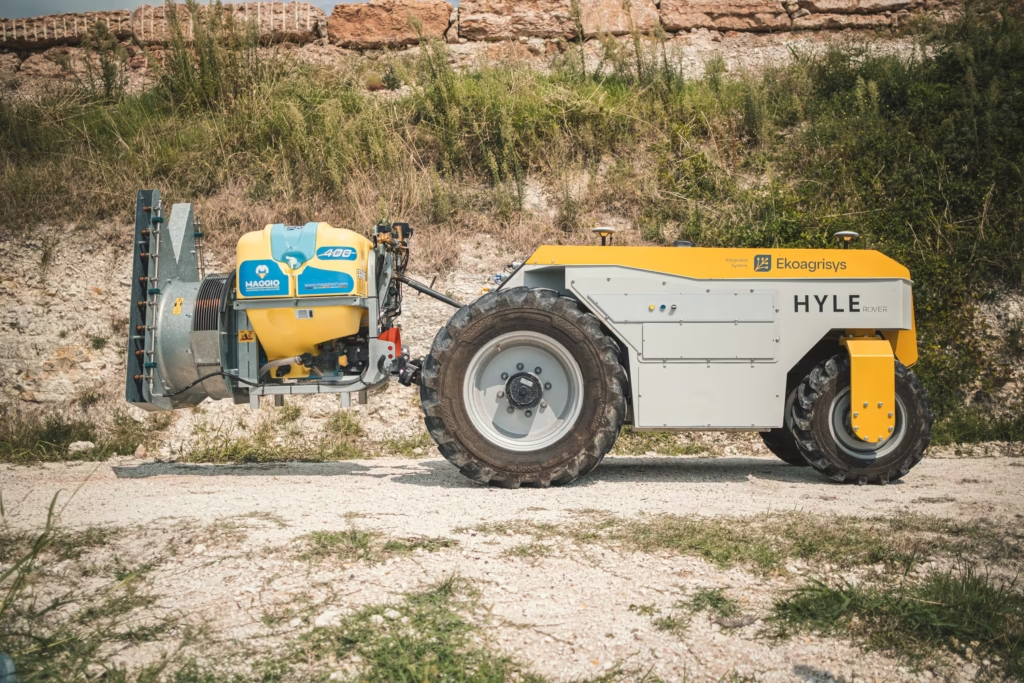
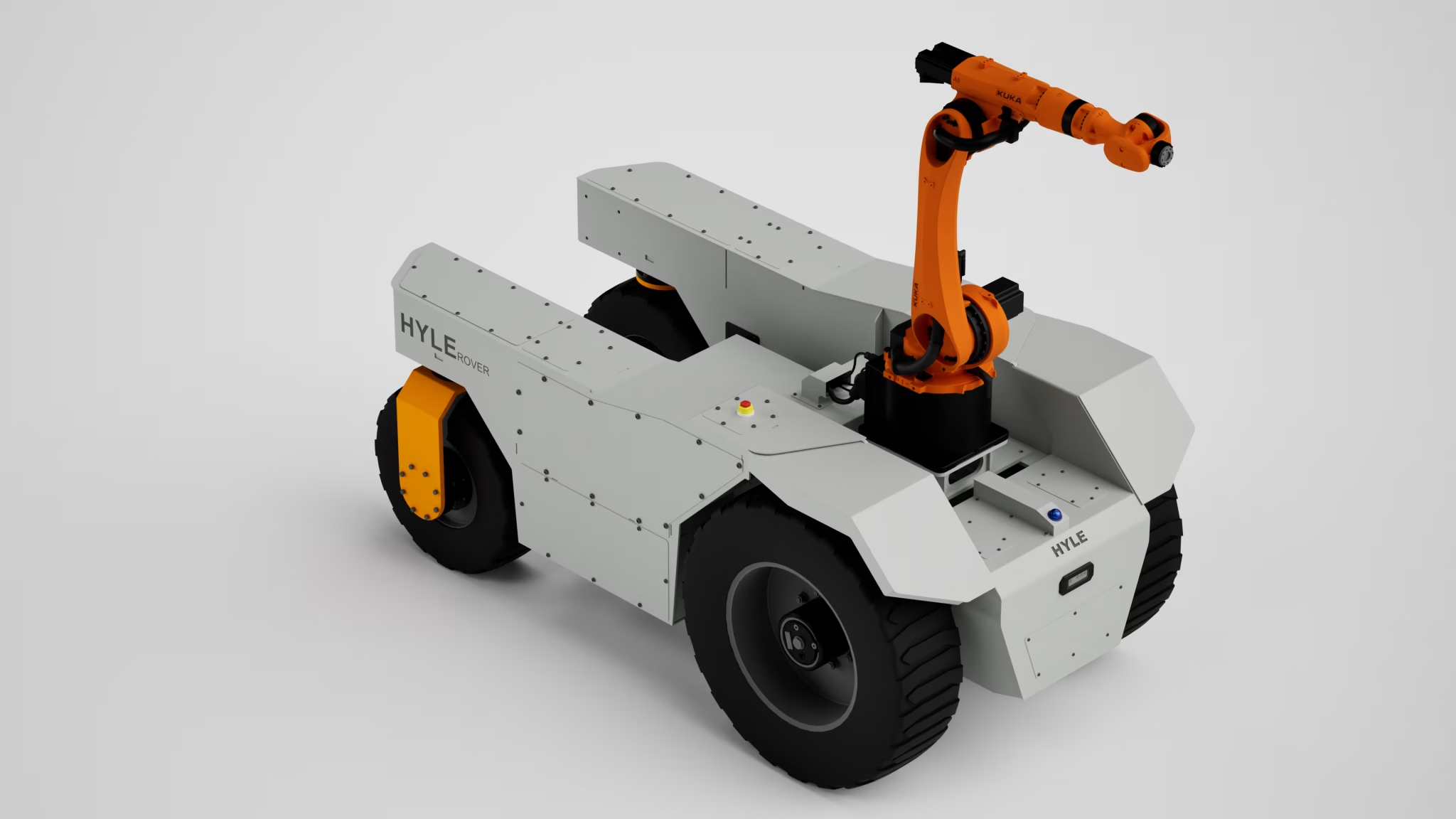
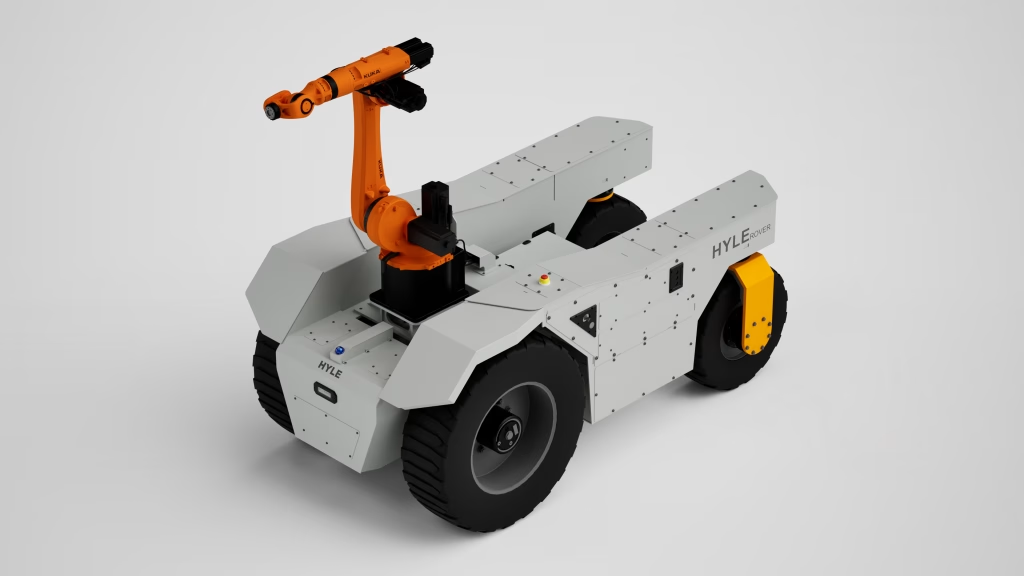
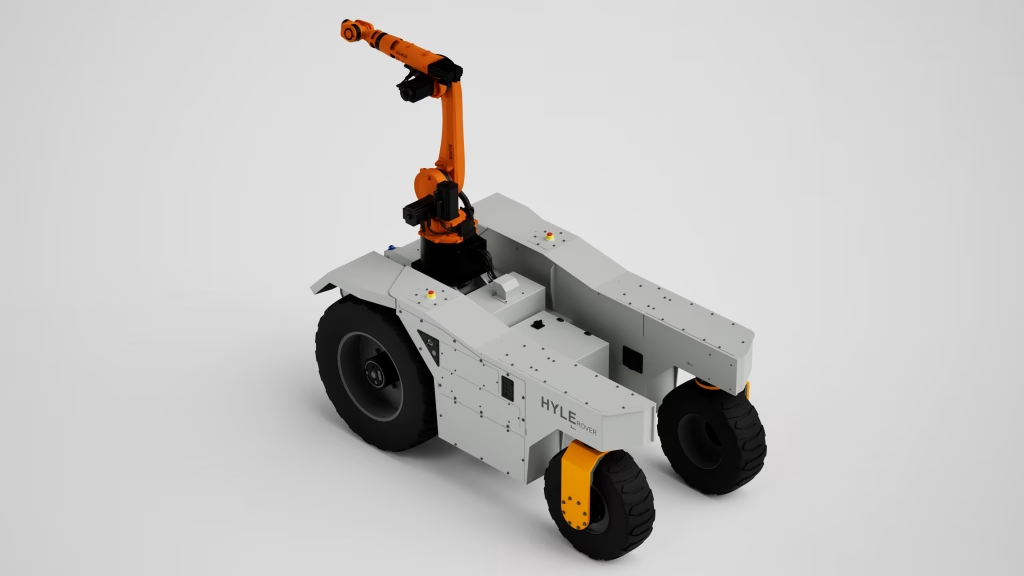
The possibility of integrating HYLE Rover mobile platforms, developed by CLOR Industry, with KUKA articulated robotic arms stems from this vision.
Not from a single application, nor from the desire to create a machine dedicated to a single task, but from the encounter between two complementary dimensions: the mobility of a configurable robotic platform and the operational capabilities of industrial robotics.
An integration that opens new scenarios and makes a broader idea of automation concrete: bringing advanced manipulation and intervention capabilities even to places where, until today, a traditional robotic station could not arrive.
“We have created a platform capable of hosting different technologies to automate processes that cannot yet be automated, or in places where they have never been.”
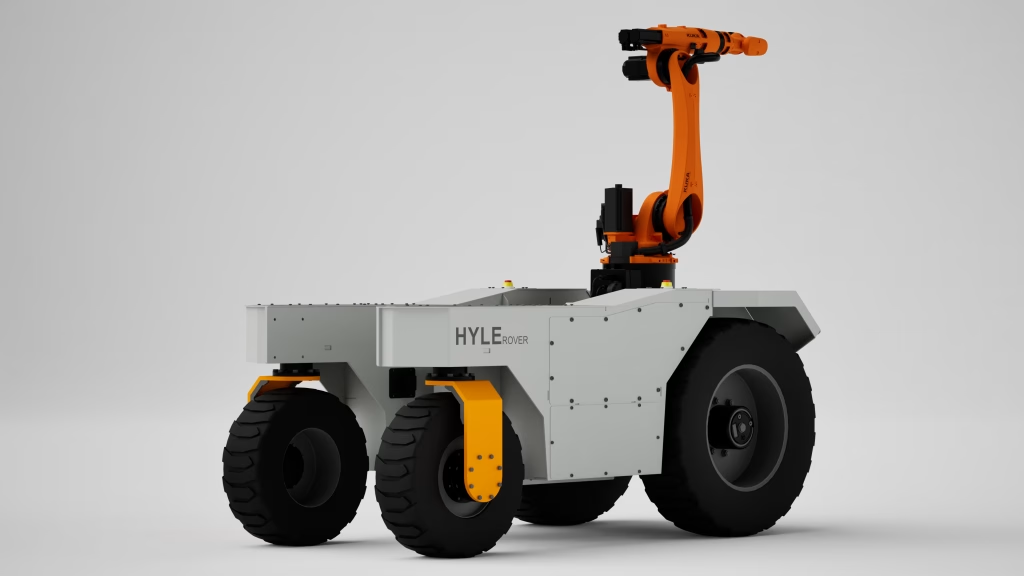
The reversal of the paradigm:
when it is the machine that reaches the process
An articulated robot installed in a traditional cell operates within a defined space. It is an extremely effective solution when the process is stable, repetitive, and concentrated in a precise point.
Many real scenarios do not meet these conditions.
- Operations can be distributed over large surfaces, change position over time, or take place in unstructured environments.
- The workpiece can exceed the robot’s range of action.
- The operational point can be located along an infrastructure, in an outdoor area, or in a space that cannot be reconstructed around an automated cell.
In these cases, staticity becomes a limitation and mobility takes on a completely different value. It does not just serve to transport something from point A to point B: it can bring an operational capability directly where it is needed.
The potential of the integration between mobility and industrial robotics
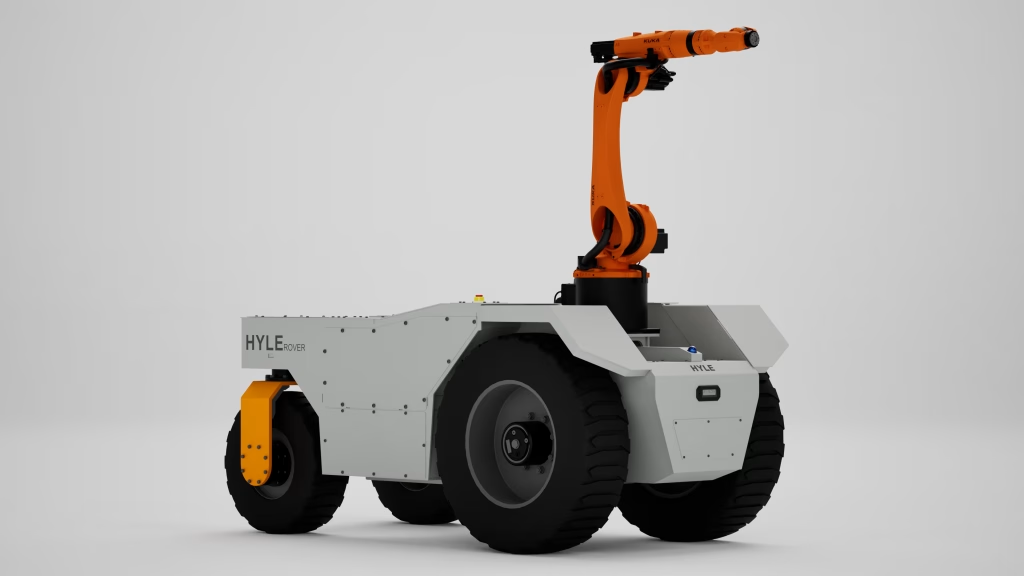
The possibility of integrating a KUKA articulated robotic arm onto a HYLE Rover platform overturns this logic.
A configuration of this type can transform the platform into a true mobile robotic station, capable of reaching the operational point while, at the same time, making available manipulation functions, interaction with tools, inspection, or processing based on the designed mission.
The rover’s mobility expands the robot’s operating space. The robot expands the platform’s functional capabilities. The value, therefore, does not lie in the individual component, but in the relationship between mobile robotics and industrial robotics.
No longer a machine standing still waiting for the process, but a platform capable of bringing the robotic process into the field
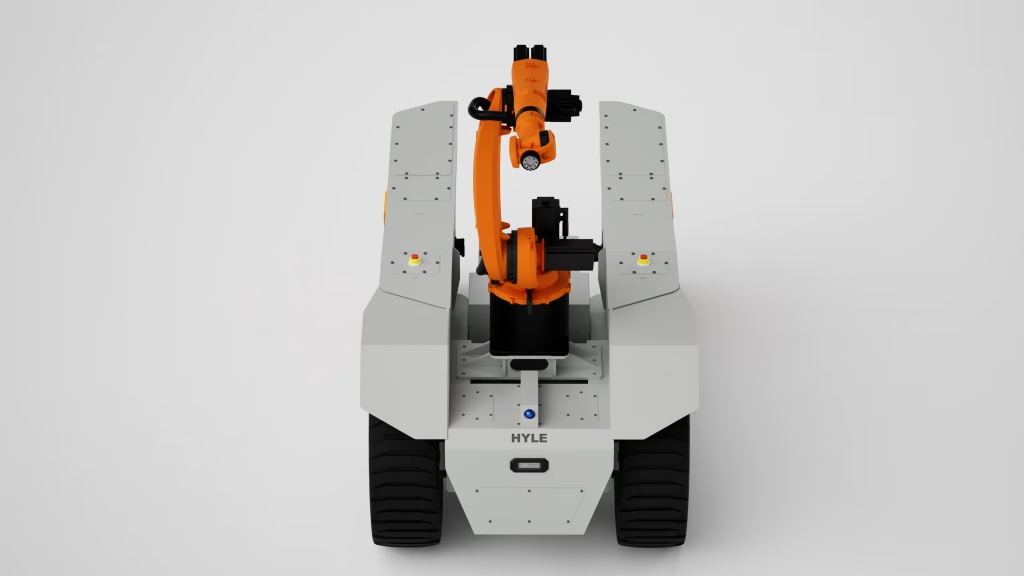
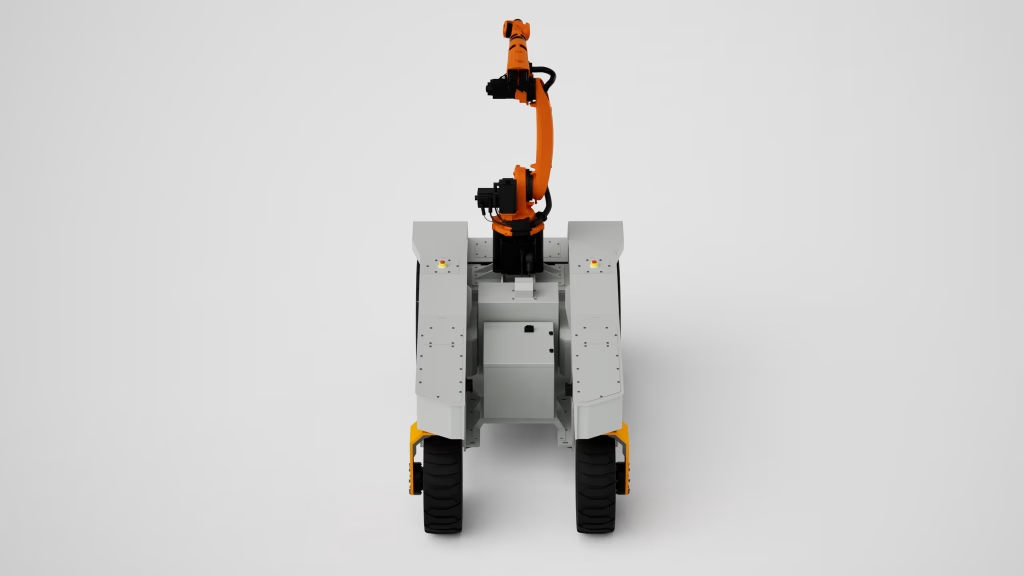
CLOR INDUSTRY and KUKA:
a collaboration that evolves towards a new frontier
The possibility of imagining this integration does not stem from an isolated experiment. It is the natural evolution of an already consolidated technological relationship.
CLOR Industry, the company behind the HYLE Rover project, is a partner of KUKA Italia and has collaborated for years on the development of advanced automation systems, processing cells, robotic islands, and custom solutions for complex processes.
This experience has allowed for the development of deep engineering expertise in the integration of articulated robots, in the design of articulated systems, and in the development of applications that cannot be addressed through standard products.
Today, the same heritage of knowledge encounters a new frontier: mobile robotics.
Mobile robotics integration:
beyond simple installation
HYLE Rover platforms in fact allow for the transfer of the logic of robotic integration towards systems capable of moving and operating in different contexts.
In this perspective, KUKA represents a leading technological reference and a valuable partner to explore how the consolidated capabilities of industrial robotics can extend their range of action beyond traditional environments
It is not simply a matter of installing a robotic arm on a mobile base
A system of this type requires connecting mechanical architecture, power supply, control, navigation, sensors, software, and operational capabilities.
Everything within a system designed for a specific mission.
It is precisely this culture of integration that unites the path of CLOR Industry, KUKA, and HYLE Rover: starting from complex problems to build systems that standard products, on their own, cannot solve.
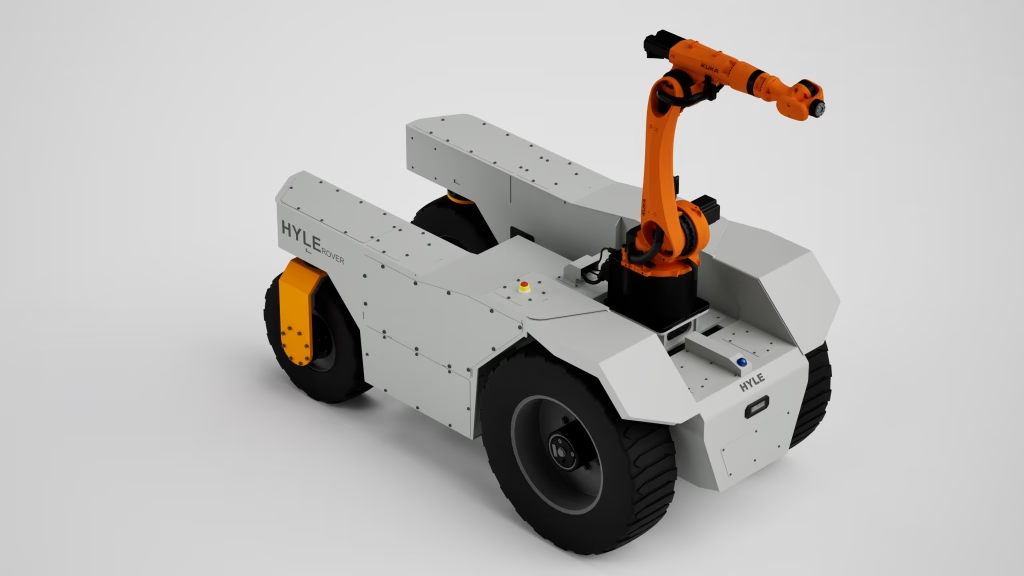
Beyond traditional AMR:
indoor and outdoor automation
The market for Autonomous Mobile Robots (AMR) has developed primarily in structured indoor contexts such as warehouses, manufacturing plants, and logistics centres, where regular flooring and relatively predictable paths favour the automation of material handling.
HYLE Rover is born from a broader philosophy.
The platforms are conceived as modular and configurable robotic bases, prepared to integrate different sensors, equipment, software, and technologies, and to tackle missions in both indoor and outdoor contexts.
The point is not to oppose the traditional AMR, but to broaden the very meaning of robotic mobility. Replaces: A rover does not necessarily have to be limited to transporting a load from point A to point B: it can carry with it a true operational capability.
When mobility reaches unstructured environments
Equipped with an articulated arm, vision systems, and end-effectors developed according to the process, a mobile platform can reach the work area and make available capabilities that would normally remain tied to a fixed station.
It is a perspective particularly relevant in unstructured contexts, where automation must contend with large spaces, uneven terrain, variable environmental conditions, and distributed operational points.
It is here that the boundary between indoor and outdoor assumes a strategic meaning: automation is no longer linked only to places designed to accommodate it, but can be rethought to reach the real context where the work must be performed.
The true conceptual leap is not just moving. It is bringing an operational capability where it is needed.
One platform, many application possibilities
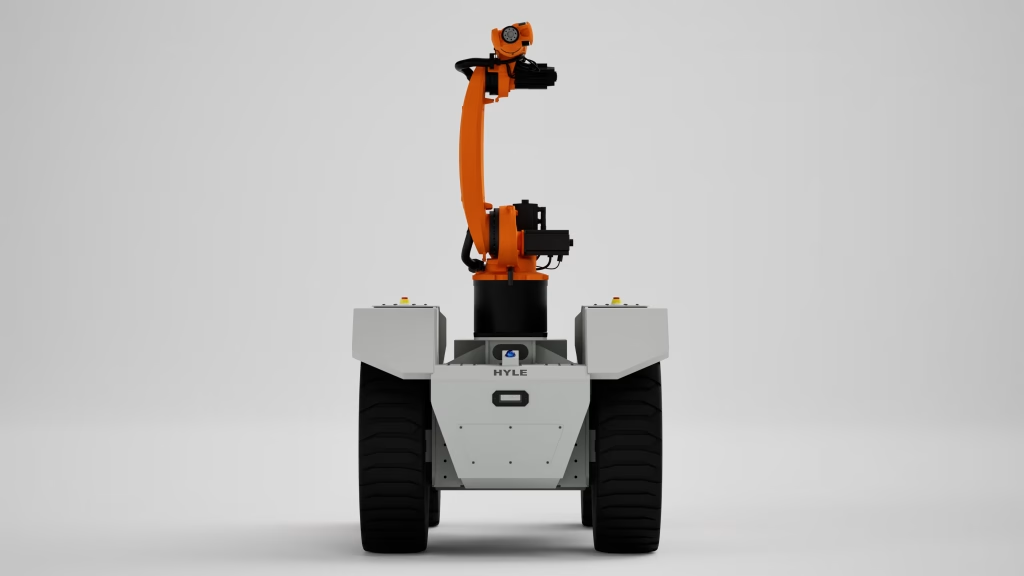
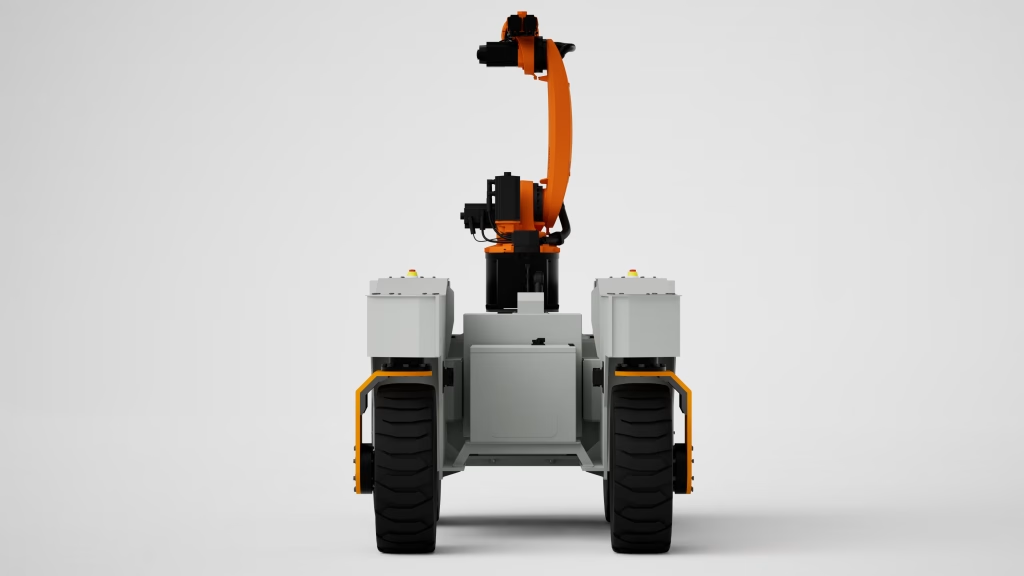
The most interesting aspect of the integration between HYLE Rover and KUKA does not coincide with a single use case. On the contrary, it resides in the possibility of configuring the platform according to very different problems.
One can imagine scenarios related to:
- material handling in construction sites and outdoor industrial areas;
- maintenance and inspection of infrastructure;
- utilities and the energy sector;
- advanced agriculture;
- sampling activities;
- environmental and forestry contexts;
- mining, quarries, civil protection, and logistics in unstructured spaces.
These are possibilities, not a catalogue of already defined applications.
And that is precisely the point.
When Mobility Reaches Unstructured Environments
HYLE Rover is born as an enabling platform, not as a closed or single-function machine. The same technological base can be prepared to host robotic arms, vision systems, environmental sensors, tools, processing equipment, sampling systems, or specific modules developed for a given process.
Modularity is the cornerstone around which the entire project revolves, allowing for intervention on several levels:
- mechanical, through dedicated frames, interfaces, and supports;
- electrical and electronic, with provisions for power, signals, and communication;
- software, through control, supervision, and mission planning logic;
- application-based, through tools and end-effectors designed around the activity to be performed.
The platform remains. The tools, sensors, and missions change.
It is this ability to reconfigure that makes the project particularly interesting: not building a completely new machine every time, but having a technological base on which to integrate different skills and functions in relation to the objective.
And perhaps the most interesting applications are precisely those that have not yet been imagined.
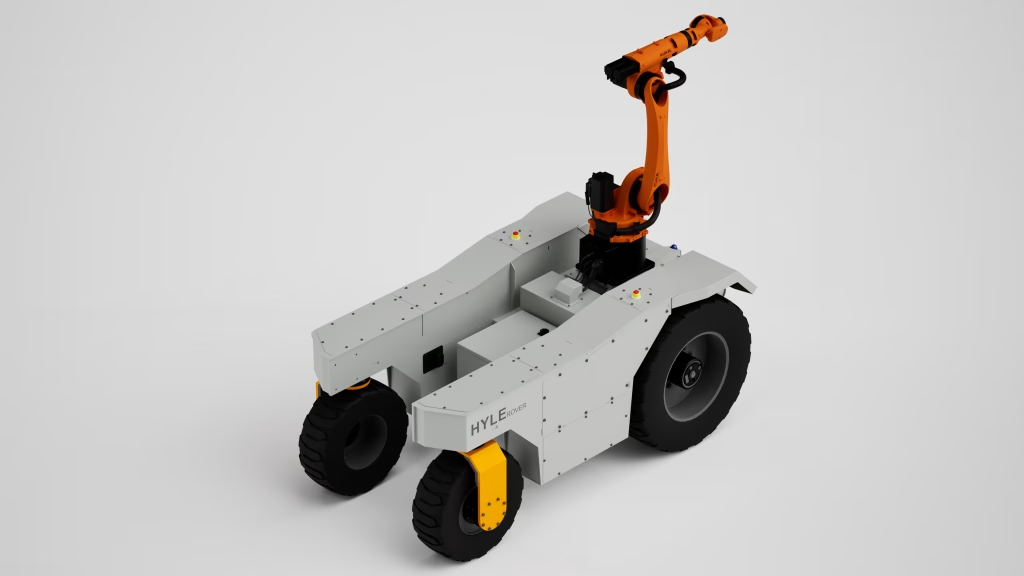
Imagining the platform equipped with a KUKA articulated arm serves to illustrate a vision of infinite application possibilities.
Co-designing the automation that does not yet exist
A modular platform, on its own, does not eliminate complexity. It does, however, allow it to be addressed with a different approach.
HYLE Rover does not start from a standard configuration to be forcibly adapted to any problem.
The starting point is the process: where it takes place, what critical issues it presents, what operations need to be automated, what tools are necessary, and what level of autonomy the mission requires.
Configuration takes shape from these questions.
It is a shared design approach that brings together CLOR Industry, HYLE Rover, technological partners like KUKA, integrators, and the end customer. Skills converge around a real need, and the platform’s modularity allows the solution to be built without starting from scratch every time.
It is perhaps here that the most authentic meaning of this collaboration lies.
Not to show a single machine intended for a single task, but to make a new direction for robotics concrete: bringing advanced industrial capabilities into places where automation is still difficult, limited, or non-existent today.
Because the future of automation might not be defined solely by increasingly high-performance robots inside factories. It could also depend on the ability to move those technologies out of traditional spaces, make them mobile, and build new ways of operating around them.
It is no longer just a question of what a robot can do.
It is a question of where it can reach.