

From Platform to
Operational Solution
Operating a robotic system requires preliminary analysis, technical configuration, integration of the required components and feasibility assessment.
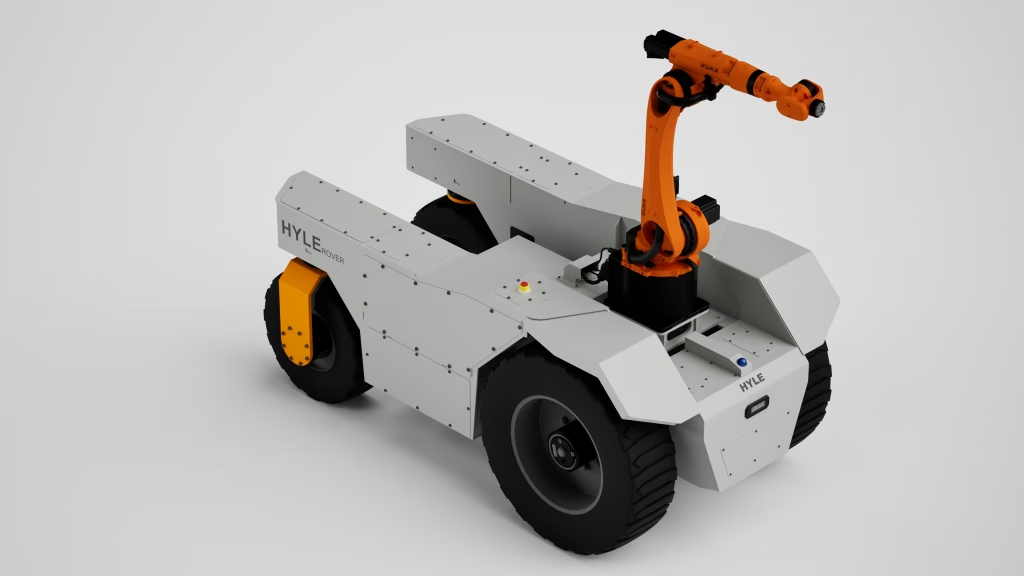
HYLE Rover services turn a modular robotic base into a solution aligned with real constraints and specific requirements. The process evolves from idea to testing through continuous dialogue between mechanics, electronics and software.
- Technical and operational assessment
Context Analysis for Targeted Configurations
Every solution requires the parameters that guide its configuration to be mapped: the working environment, loads to be handled, movement dynamics and expected operating endurance. Analysing the constraints of the environment makes it possible to define the required level of integration from the earliest stage of the project.
The technical and operational assessment eliminates generic evaluations, basing the discussion on concrete technical data to identify the most suitable platform. The outcome is clear initial guidance, essential for understanding which configuration offers the greatest potential for the project.
- Design and development
Technical Development for Specific Requirements
Technical adaptation is required where the standard configuration does not meet conventional operational requirements. The design and development phase shapes the solution around the application to be implemented, overcoming the limitations of preconfigured systems.
Development work optimises hardware and software architectures, dedicated interfaces and advanced control logic. Each technical customisation turns the platform into an integrated system that is fully aligned with the automation objectives and the needs of its operating environment.
- Integration and customisation
Open Systems: Sensors, Modules and Equipment
The modularity of the platform allows sensors, subsystems and dedicated functions to be integrated without proprietary constraints. The configuration evolves according to operational needs while retaining the nature of an open, flexible robotic system designed for future development.
The architecture accommodates data acquisition systems and operational modules, connecting effectively with external software tools and architectures. This approach avoids the creation of closed products, supporting interoperability between the machine and the tools already present in the operating environment.
- Requirements and compliance support
Technical and Regulatory Framework for the Project
Managing technical requirements and regulatory constraints requires specialist support to define the development scope of the robotic solution.
Documentary and technical analysis makes the project pathway clear by removing initial ambiguity, facilitating formalisation of the work and accelerating the implementation phase.
A rigorous framework ensures design robustness, reducing the risk of non-compliance during integration.
- Validation and proof of concept
Feasibility Assessment Before Scale-Up
Assessing technical viability before scale-up reduces the risks associated with unforeseen variables. Proof-of-concept and experimental activities validate the configuration against loads, movement and overall operational logic in real use scenarios.
Testing ensures that the platform meets the customer’s objectives exactly. Each assessment provides reliable data to confirm the feasibility of the solution, allowing targeted optimisation before final field implementation.
- Support, maintenance and remote assistance
Operational Continuity and Remote Diagnostics
Platform management continues after configuration through structured support. Maintenance and remote assistance ensure operational continuity, maintaining high standards of efficiency and reducing machine downtime.
The rover’s modularity facilitates remote diagnostics and continuous technical supervision. Support ensures transparent management of the solution, guaranteeing operational stability and parameter monitoring throughout the lifecycle of the robotic system.
- Training
Independent Management of the Robotic System
Transferring technical expertise ensures mastery of the platform and its control tools. Training enables teams to manage system logic and day-to-day working procedures independently, consolidating the value of the solution.
Becoming familiar with the selected configuration makes it possible to maximise machine performance and significantly reduce the need for external support.
- Become a Customer
An Integrated Design Process
Assessment, design, integration and validation are not isolated stages, but a fluid process.
Field experience guides innovation: every limitation encountered becomes a design direction. Choosing HYLE Rover means adopting a method capable of connecting the robotic base, control software and business objectives.
Do You Have
a Project to Assess?
When a technical requirement calls for an overall view, the initial consultation defines the platform, configuration, components and level of development.
Turn the robotic base into a solution aligned with your operating environment.
- FAQ - Frequently asked questions
Support covers the entire ecosystem: base selection, component integration, regulatory support and development of the final solution.
Yes. Preliminary validation, proof-of-concept and technical testing activities are available for real use scenarios.
Yes. The modularity of the range allows the integration of sensors and equipment, as well as connections to management software or external architectures.
Platforms and Software define the hardware architecture and system intelligence. Services are the project development arm: the analysis, development and integration activities required to turn the technology into an operational solution aligned with the real environment.