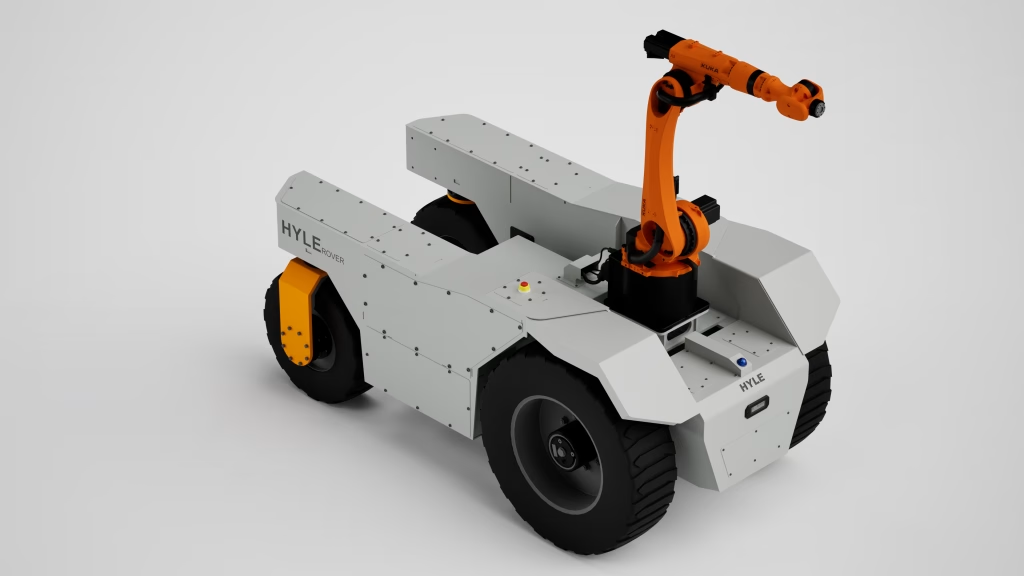


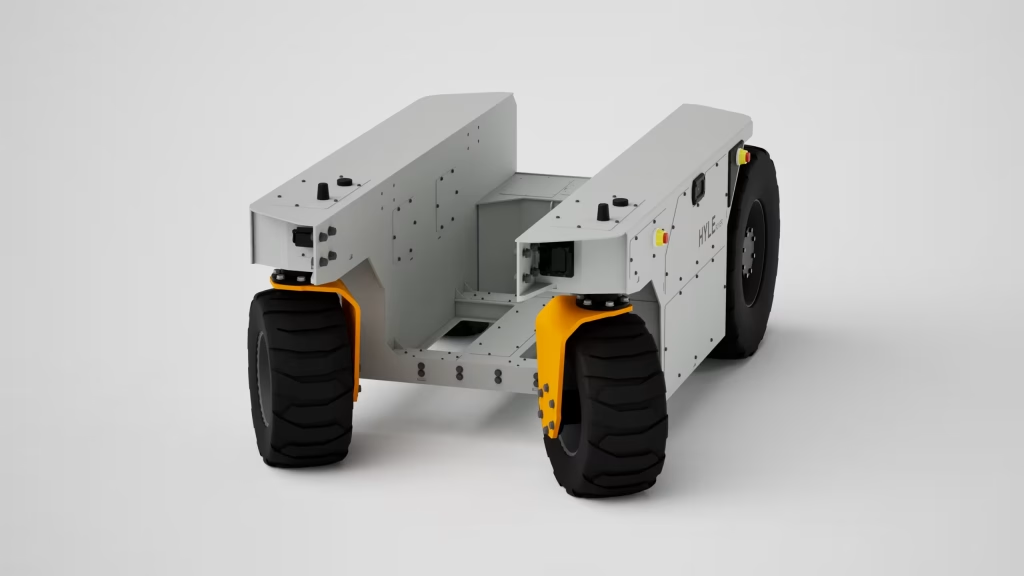
HYLE Rover HY Baros
1300 S / 1600 S
HY Baros, available in two sizes, Baros HY 1300 S and Baros HY 1600 S, is an autonomous HYLE Rover robotic platform that combines payload capacity, performance and compact dimensions. Its open, modular architecture integrates sensors, equipment and application software, adapting to a range of environments from agriculture to industry.
The front steering wheels improve manoeuvring smoothness, directional stability and operating efficiency, reducing slip and tyre wear even on challenging terrain. Robust and flexible, HY Baros ensures operational continuity and reliability when carrying heavy loads while maintaining movement accuracy and compact dimensions.
- The distinctive value
Why Choose this platform Baros HY 1300 S / Baros HY 1600 S
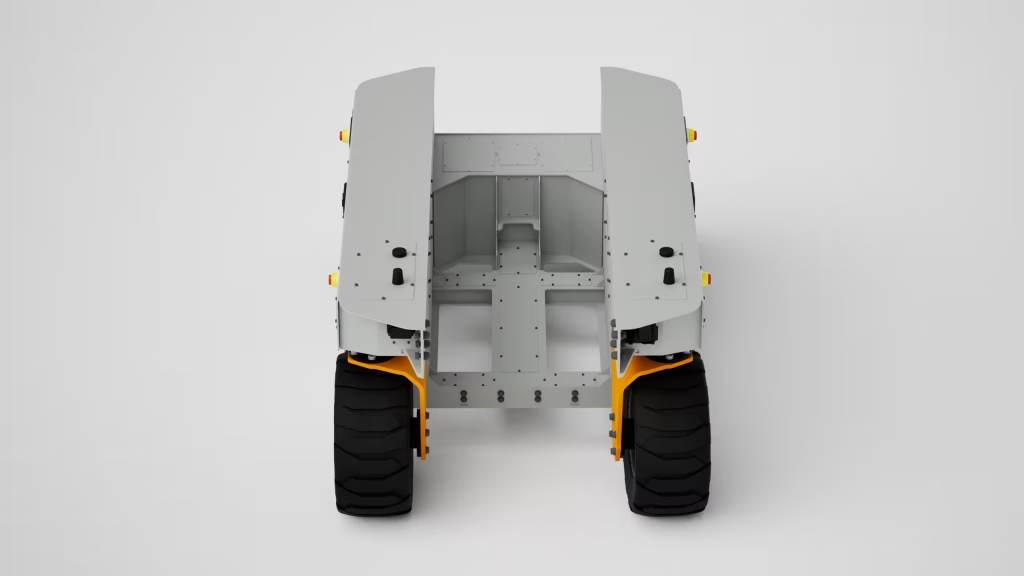
HY BAROS represents the balance between compact dimensions and performance within the **Series S** range: a platform designed to handle higher payloads and more demanding applications while retaining operational agility and movement control.
Front steering combined with rear-wheel drive delivers smooth, progressive motion. This configuration reduces lateral slip and ensures controlled trajectories, making it ideal for operations along defined lines and complex working environments.
The platform is designed as an open system: sensors, equipment and application modules can be integrated onto an established base, allowing complete freedom in software development and hardware integration, without proprietary constraints.
The native configuration is fully electric and prepared for a hybrid power system. This design flexibility allows endurance and operational continuity to be adapted to the actual application requirements.
HY BAROS optimises the relationship between dimensions, weight and payload capacity. It delivers strong performance in a compact format, making it a versatile Series S platform across different operating scenarios.
HY BAROS 1300 S and HY BAROS 1600 S share the same technology architecture. The two size options allow the platform to suit the available working space without changing its control and integration logic.
What Distinguishes Baros HY 1300 S / Baros HY 1600 S within the HYLE Rover Range
HY BAROS belongs to the HYLE Rover Series S, developed for applications requiring controlled trajectories and smooth travel through a combination of front steering and rear-wheel drive.
This configuration ensures linear, progressive movement, reduces wheel slip and improves stability and operating efficiency on uneven ground or in operations along defined lines. The robust structure, engineered for heavy payloads, ensures operational continuity and long-term reliability.
With its mid-size dimensions, HY Baros balances a compact footprint with operational capability, offering versatility without compromising power or control.
- vs HY Kleos
Baros provides a structure better suited to complex configurations and offers greater operational capacity.
- vs HY Talos
Baros maintains a more balanced footprint and position within the range without moving into the high-capacity platform category.
- vs HY Kratos
Baros uses a steering architecture focused on trajectory accuracy and supports more substantial mid-range configurations. Kratos is the option to consider when a smaller footprint and very tight manoeuvres are the priorities.
Technical specifications
Integration, Configurability and Operational Continuity
HY BAROS 1300/1600 S is an open, configurable platform ready to integrate control interfaces, application modules and project-specific components.
Its hybrid-system readiness and modular architecture allow endurance and operational continuity to be extended, adapting the platform to the specific requirements of the application environment.
Note: The specifications refer to the base model. Add-ons, equipment and bespoke configurations may change the final dimensions and characteristics.
- Tell us about your project
The correct configuration depends on the required operating capacity, dimensional constraints, trajectory accuracy and components to be integrated. If your project needs a robust base for demanding tasks and controlled movement, the next step is a focused technical discussion.